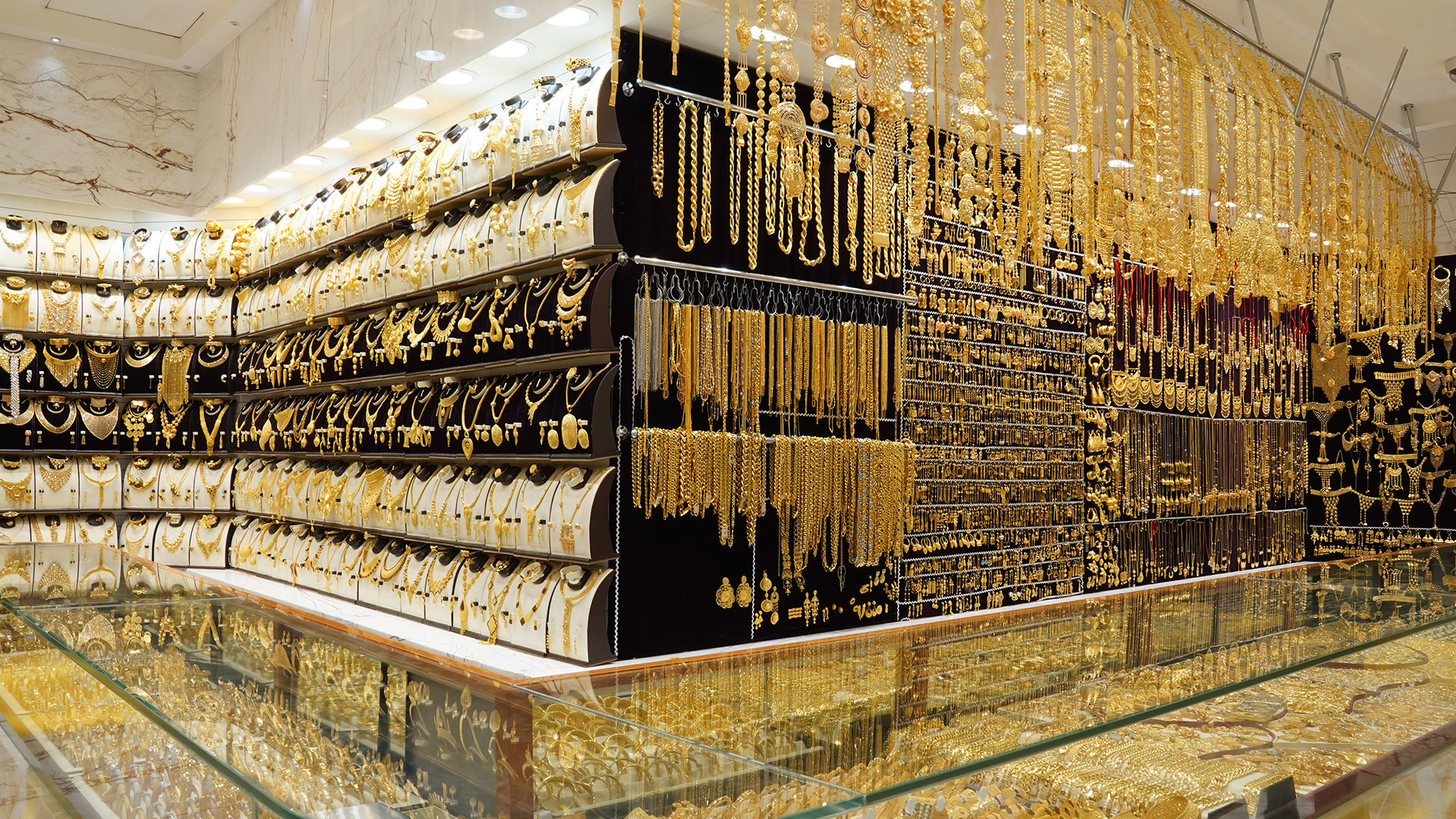
Gold Fever Continued: 75% of Armenia's Exports are Gold and Diamonds
Over the last two and a half years the structure of Armenia’s trade turnover has registered significant changes. In 2023 exports grew by 55.3 percent, reaching 8.4 billion dollars from 5.4 billion dollars (2022). At the same time imports grew by 40.2 percent, reaching 12.3 billion dollars from 8.8 billion dollars over the same period. Over the last two years exports and imports grew by 2.8 and 2.3 times respectively. There are also significant structural changes in trade turnover.
Precious stones and metals (TN VED 71), mainly the export of gold, have become the predominant branch of exports; in 2023 about 1/3 of total exports consisted of the re-export of precious stones and metals. The rapid growth of gold re-exports started in November 2023 and is still continuing. In 2023 the re-export of this commodity type occupied 2/3 of re-exports.
Read the first part of this research:
Chart 1.
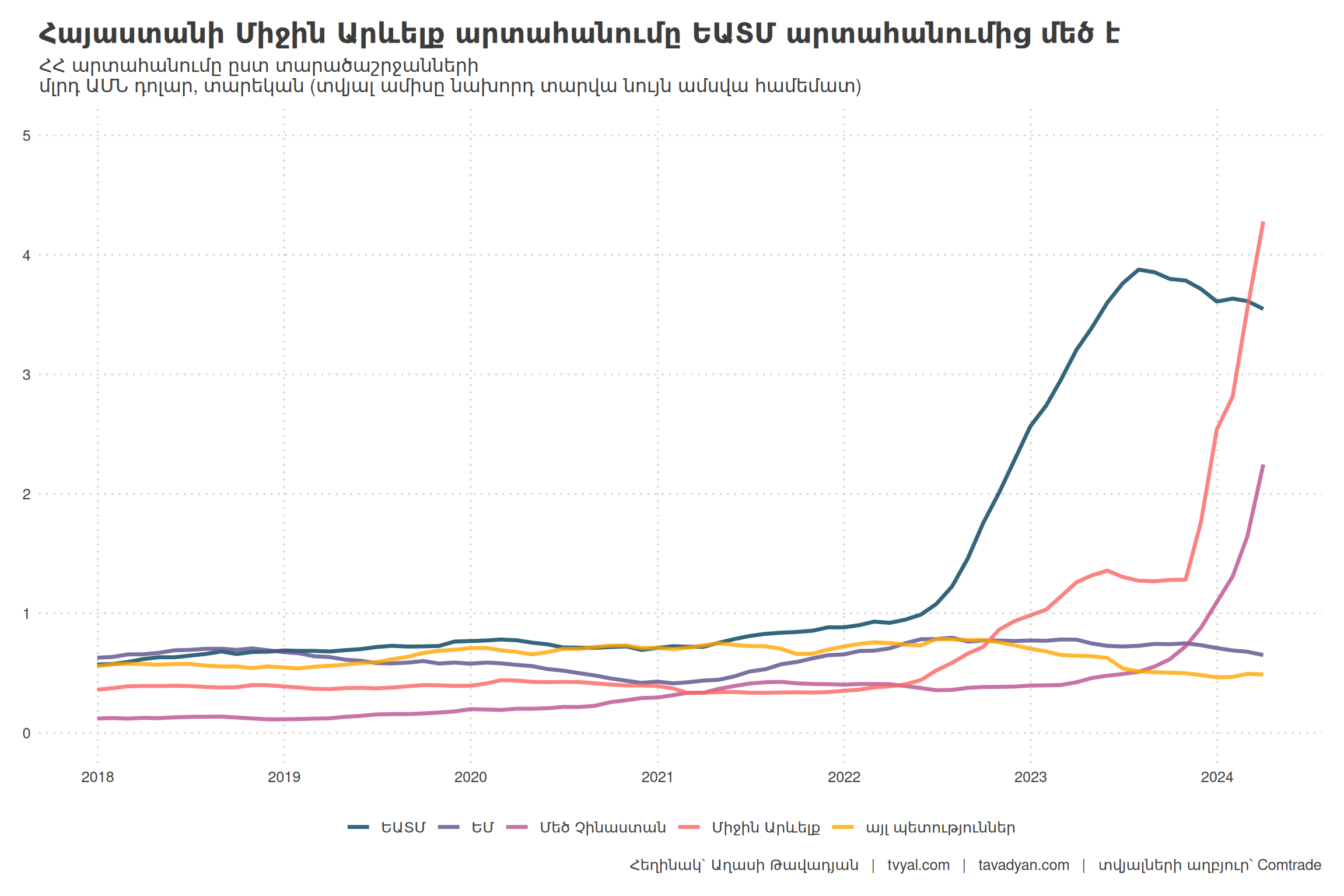
Armenia’s exports in March 2024 compared to the same period of the previous year already amounted to 11.2 billion dollars, of which only 54.7 percent or 6.1 billion dollars is the export of precious and semi-precious stones and metals. Let us note that in March 2023 compared to the same period of 2022, Armenia’s exports amounted to 6.3 billion dollars, of which 1.3 billion dollars or 20.2% was the export of precious and semi-precious stones and metals. The 6.1 billion dollars worth of precious and semi-precious stones and metals were mainly re-exported from Russia to the United Arab Emirates and Hong Kong. The re-export estimated by us for March 2024 on a 12-month basis constitutes about 65% of the 11.2 billion dollars. The re-export methodology is presented via this link.
Chart 2.
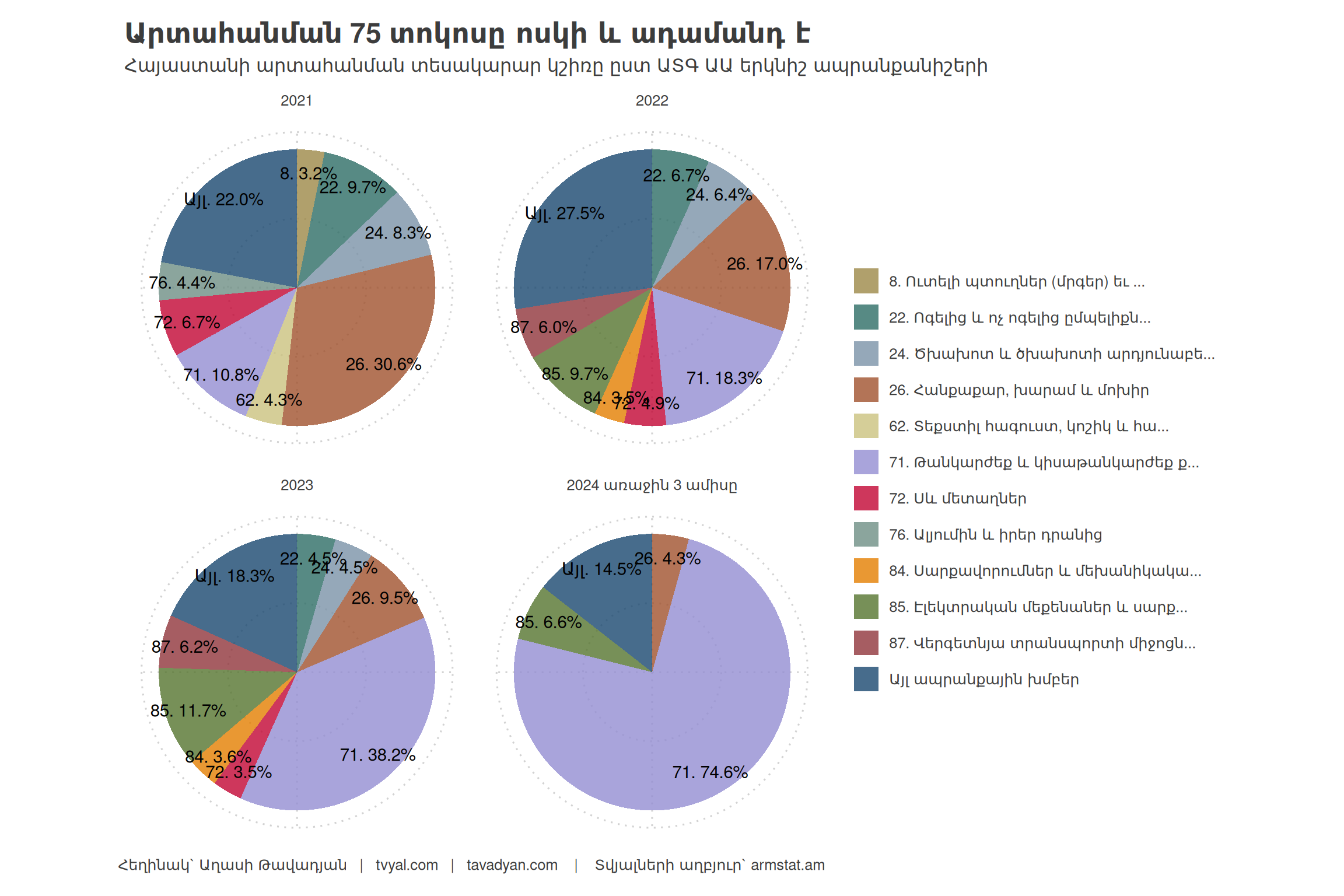
In the first quarter of 2024, 75% of exports are precious and semi-precious stones and metals.
For the first quarter of 2024 alone RA exports amounted to 4.4 billion dollars, and imports to 4.7 billion dollars. By comparison, in the first quarter of 2023 exports amounted to 1.6 billion dollars (2.72 times growth), and imports to 2.7 billion dollars (1.76 times growth). In 2021 Armenia’s total exports amounted to 3.0 billion dollars, and imports to 5.4. During that period imports were 1.62 times larger than exports, whereas for the first three months of 2024 that ratio is 1.07. That is, for the first 3 months of 2024 imports exceed exports by only 7 percent, which at first glance is a major step forward in terms of balancing Armenia’s historically negative trade balance, but the structural changes tell a different story.
If in the following quarters of 2024 exports and imports exhibit the same indicators, then at the end of the year exports will amount to about 18 billion dollars and imports to 19 billion dollars, which means respectively about a 2 and 1.6 times growth within one year.
Chart 3.
In the first quarter of 2024 already 74.6 percent of exports were precious and semi-precious stones and metals, amounting to 3.3 billion dollars. The majority of precious and semi-precious stones and metals, 76 percent, is the re-export of gold at 2.5 billion dollars or 37.5 tons. The export value of one ton was 66.9 million dollars. During the same period, according to official statistics, 56.2 tons of gold were imported with a total value of 2.2 billion dollars. The import value of one ton was 39.6 billion dollars. The average price of one ton of gold in the international market during this period was 73.1 million dollars.
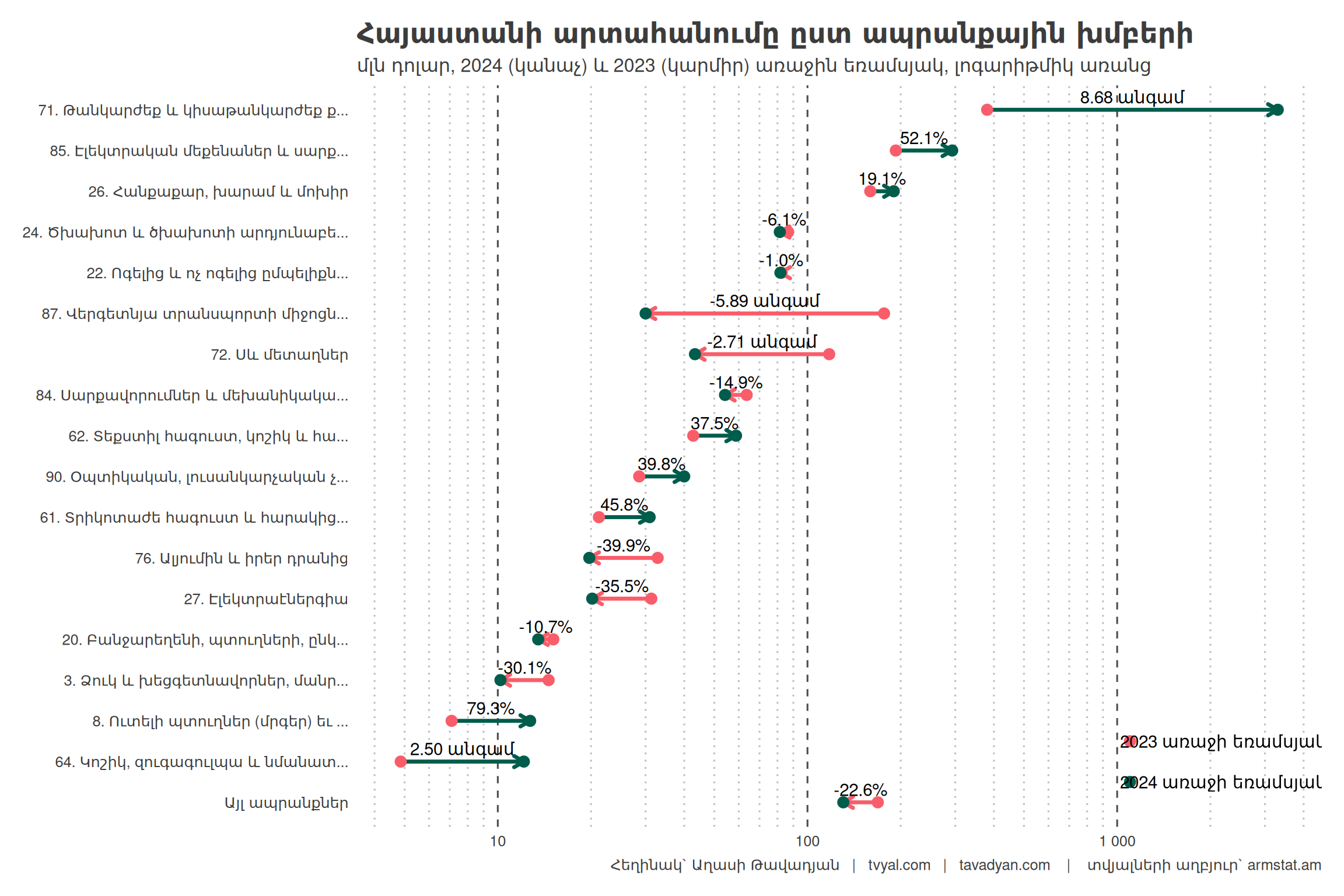
If we compare the first quarter of 2024 with the first quarter of 2023 by aggregated export commodity groups (Chart 4), growth was recorded mainly in precious stones and metals (8.7 times), textiles and footwear (42.7%), as well as ores and concentrates which had a recovery growth (18.5%). The export of all other traditional goods contracted: the export of metals and metal products contracted by 2.3 times, the export of transport and machinery, which by our assessment was re-export from other countries to the RF, contracted by 12.4 percent, the export of agricultural products (excluding beverages) contracted by 17.0%, tobacco by 6.1 percent, alcoholic and non-alcoholic beverages by 1.0%, the export of chemical substances by 31.0%, and electricity by 35.5%.
Let us note that an online platform has been created by us that assesses and forecasts Armenia’s exports by various regions and commodities. The platform provides more than 2000 forecasts.
Chart 4.
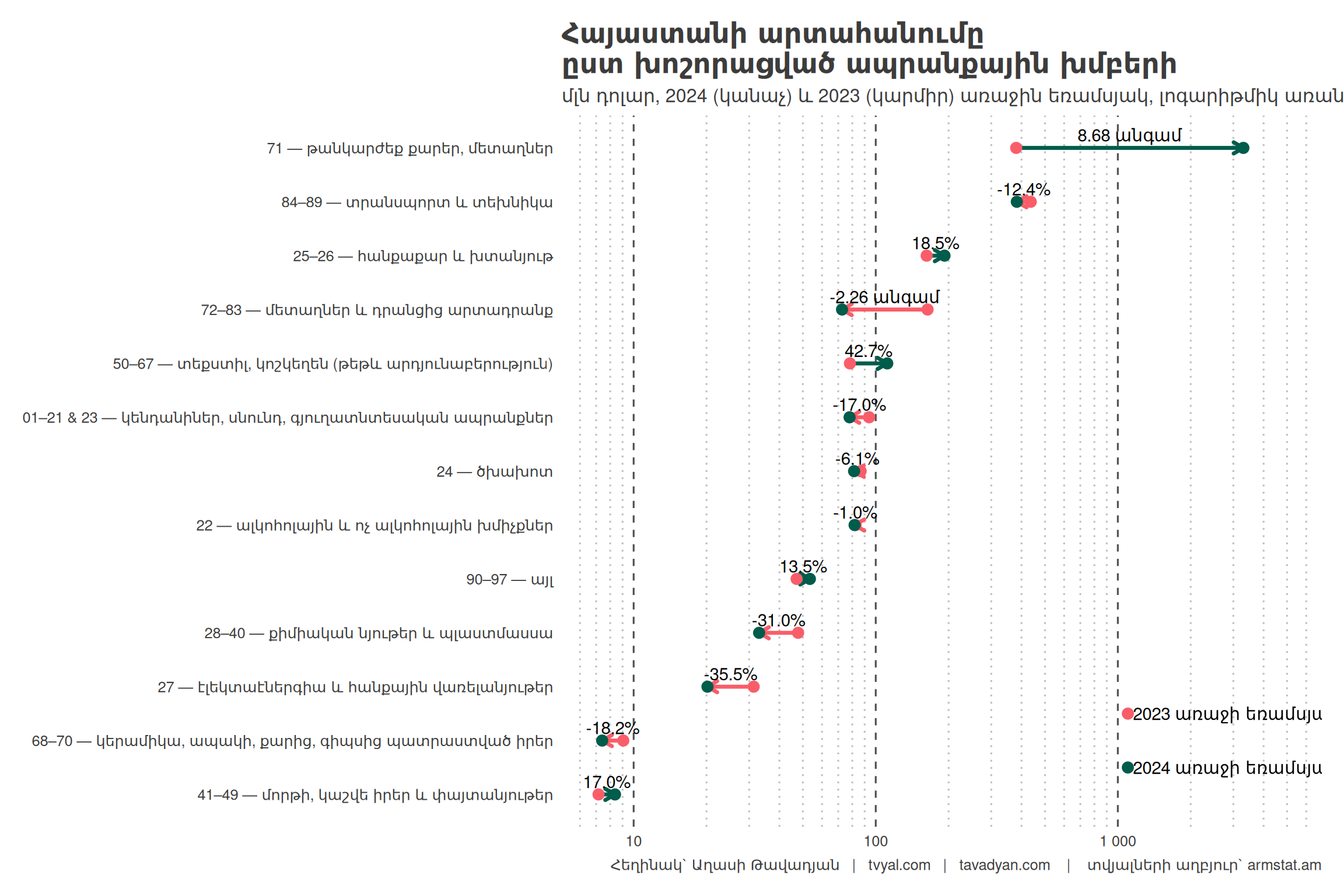
Overall there is a growth in exports and economic activity, but this is actually driven by the significant growth in gold re-exports. Without the growth of this indicator the mentioned economic indicators record a decline. Overall this circumstance contains major risks, as economic growth is currently tied to external impulses, and in the event of a change in any of the external impulses and a significant decrease in gold re-exports, the economy becomes vulnerable.
You may also be interested in the following analysis:
📈📉❓ Export Growth of 55.3 Percent or Decline of -12.2 Percent.
PODCAST !!
Let’s Talk Numbers #7
📱📍🖥 Mobile Centre, ZCMC, Vesta, Wildberries and Armenia’s Other Large Taxpayers
- 🔘 What is the situation in Armenia regarding tax collection?
- 🔘 How has the situation changed in connection with the Zangezur combine?
- 🔘 Why did companies engaged in electronics trade rise in the list?
On How2B we “talk in numbers” with economist Aghasi Tavadyan.
- 04:27 Taxes paid by the Zangezur Copper Molybdenum Combine
- 08:22 Taxes of the financial and banking system
- 10:35 The Mobile Centre company: Armenia’s large taxpayer
- 15:19 Vesta: the other company engaged in the re-export of electronics
- 17:35 Wildberries’ growth in Armenia and on the list of taxpayers
An analysis on the topic is presented on the tvyal.com website: 📱📍🖥 Mobile Centre is Armenia’s Largest Taxpayer