
Empty Pockets, High Salaries
High salaries, high expenses: An analysis of Armenia’s economic competitiveness
This week’s economic analysis deals with various aspects of Armenia’s economy, drawing comparisons with neighboring countries and global economic giants. Our analysis is based on data from Numbeo, a global database of consumer prices and other quality of life indicators.
In previous studies, we have revealed a number of significant challenges facing Armenia’s economy. In 2023, Yerevan became the most expensive city in the region, surpassing even Moscow. According to Numbeo data, at the end of 2023, 3,246.3 dollars a month were needed to maintain the same standard of living in Yerevan, whereas in Moscow it was 2,909.4 dollars. Consumer prices in Yerevan were 15.1% higher than in Moscow, and rental prices were 4.8% higher. Now these indicators have recorded some changes. In Yerevan, 3,735.0 dollars are needed, and in Moscow, 3,573.5 dollars. Consumer prices are already 11.1% higher than in Moscow, and rental prices are 4.5% higher. Still, Yerevan is more expensive than Moscow. Chart 1.
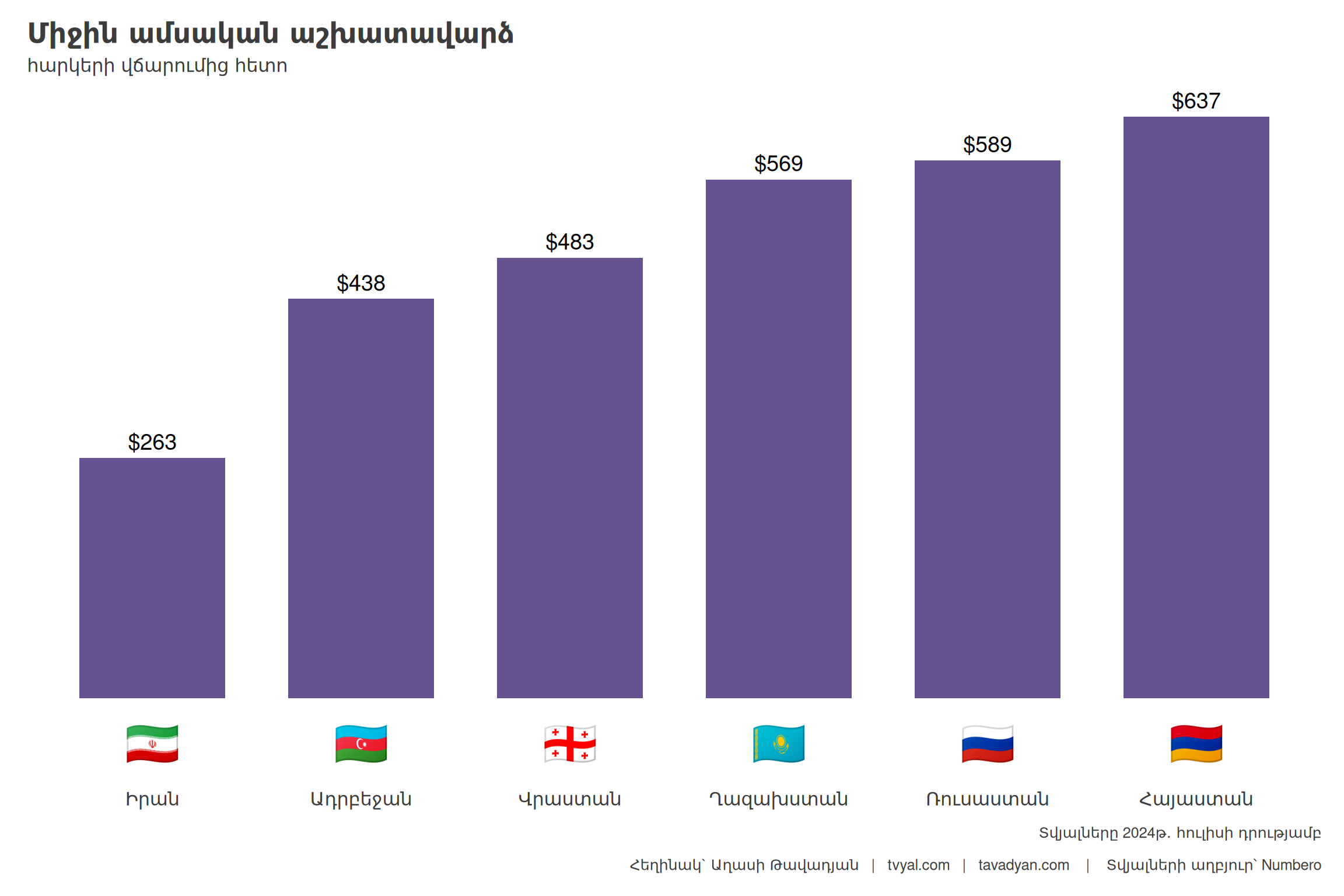
According to the latest data as of July 2024, Armenia leads the region in terms of average monthly salaries (after taxes), surpassing even Russia by 8.1%. The average monthly salary in Armenia is 637 dollars, compared to 589 dollars in Russia. However, this comparison should not be taken out of context. 47% of Armenia’s population lives in the Yerevan metropolitan area, while only 18% of Russia’s population lives in the Moscow metropolitan area. Furthermore, our recent analysis shows that 76% of private-sector jobs in Armenia are concentrated in Yerevan, highlighting a significant inequality between urban and rural areas. The concentration of jobs in Yerevan continues to intensify. In 2022, 76.3% of non-governmental jobs were located in the capital, registering a significant increase compared to previous years. Yerevan’s private sector recorded a 19.5% growth, compared to a modest 4.7% in the regions. Current estimates suggest that this concentration could lead to Yerevan’s share of private-sector jobs reaching 80%.
Chart 2.
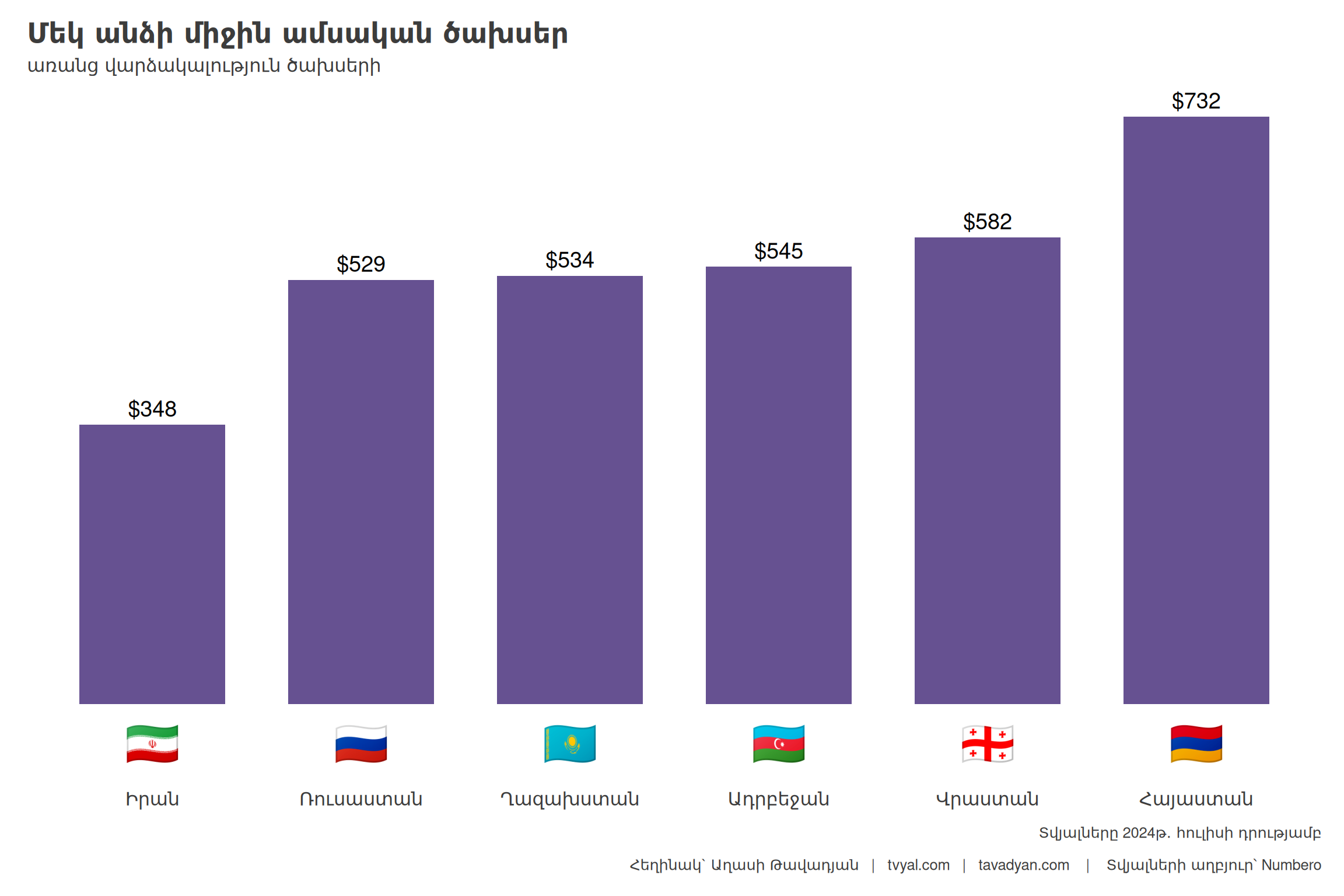
It is important to note that although Armenian salaries seem high compared to countries in the region, the Armenian dram has been the most appreciated currency among convertible currencies since the beginning of 2022. The dram has appreciated by 20% during this period: the exchange rate was 485 drams per dollar in early 2022, and it is now 386 drams. This appreciation does not have a positive effect on exports and negatively affects revenues from tourism and the IT sector. However, this appreciation has also led to an increase in domestic salaries expressed in dollars, contributing to the growth of GDP per capita and salaries. To get the full picture, it is also necessary to examine expenses. The data shows that the average monthly expenses for one person in Armenia (excluding rent) are the highest among the listed countries, amounting to 732 dollars. The high cost of living compared to salaries is a challenge for the average Armenian consumer.
Chart 3.
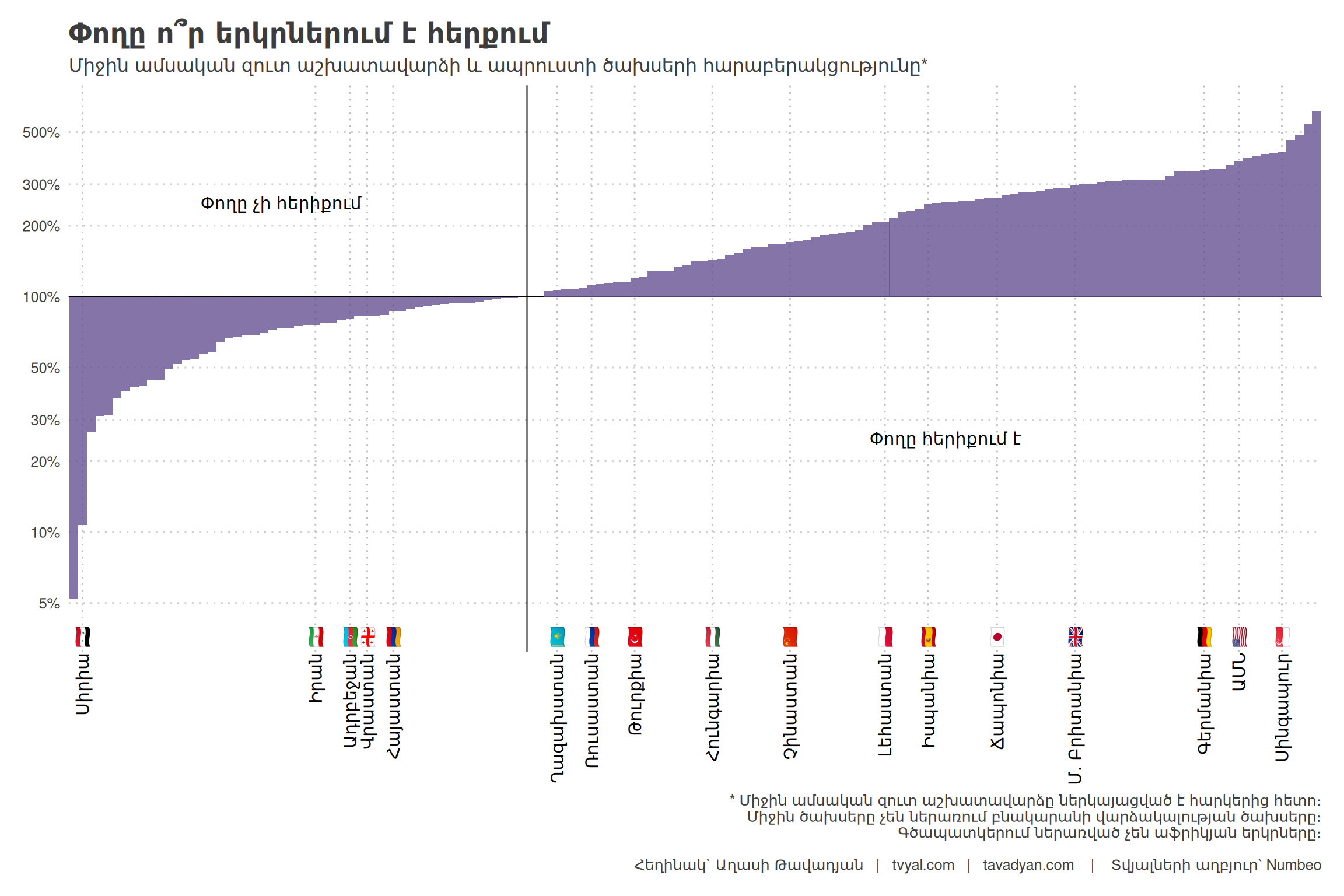
The ratio of salaries to expenses depicted in the third chart provides insight into purchasing power and the standard of living. In Armenia, this ratio is 87%, which means that average salaries cover only 87% of average expenses. While this is higher than in Azerbaijan and Georgia, it lags behind Kazakhstan, Russia, and Turkey, where average salaries exceed average expenses. For example, in Russia, salaries cover 111% of expenses, leaving an average of 11% for other expenses or savings. Let’s also consider other states presented in the chart. At the lower level, Syria’s ratio is only 10.7%, reflecting severe economic challenges. Iran and Azerbaijan also struggle, having ratios below 80%. On the other side, developed economies such as the United States, Germany, and Singapore show ratios above 300%, indicating significantly higher purchasing power and savings potential.
Chart 4.
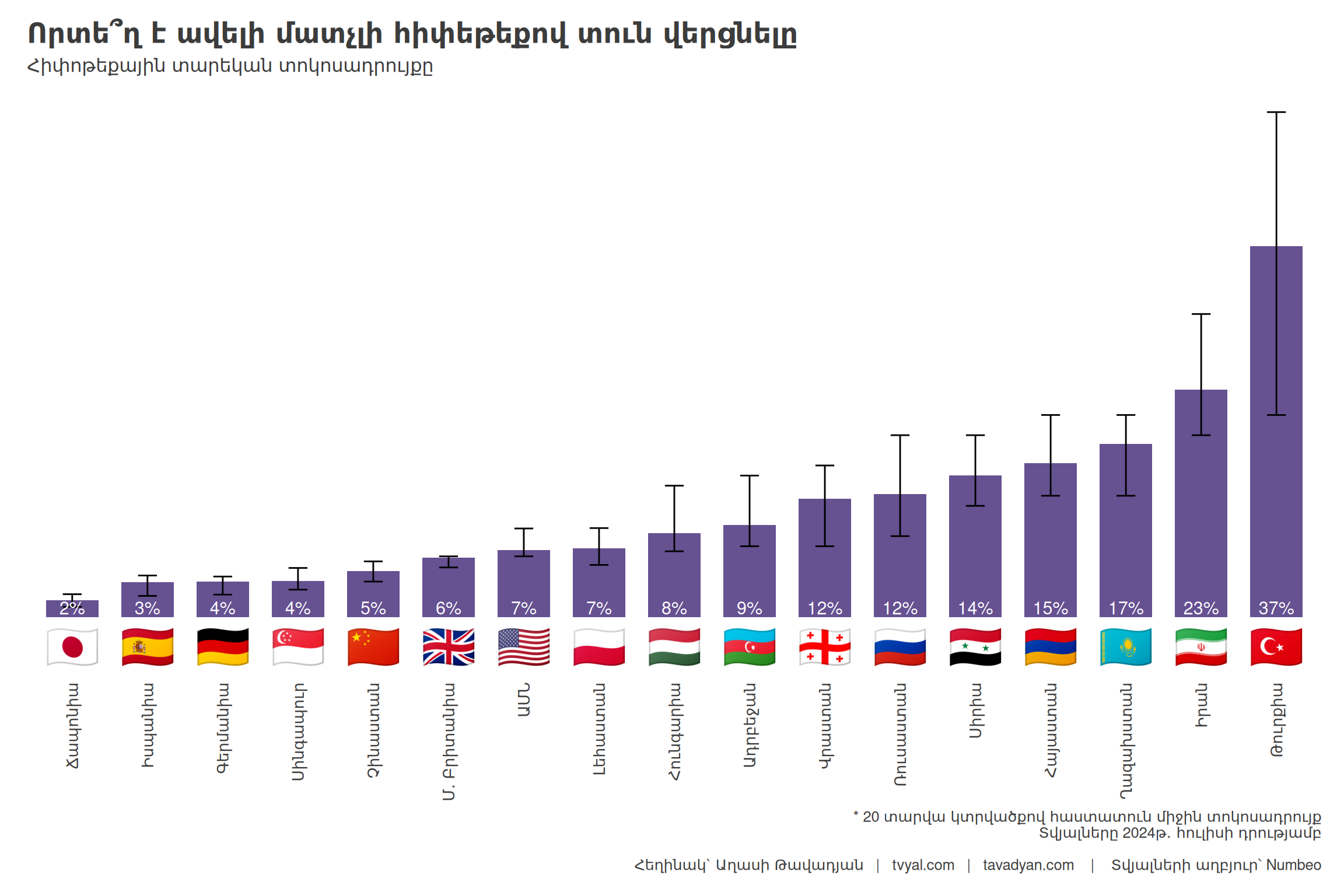
Let’s also examine mortgage interest rates. Armenia has one of the highest mortgage loan interest rates at 15% (for a 20-year fixed-rate mortgage). This high rate creates significant obstacles to property ownership without the return of income tax from the mortgage loan. By comparison, countries such as Japan (1.65%), Germany (3.51%), and Spain (3.47%) offer much more favorable conditions for homebuyers. Regional neighbors, such as Azerbaijan (9.09%) and Georgia (11.7%), offer more affordable mortgage options.
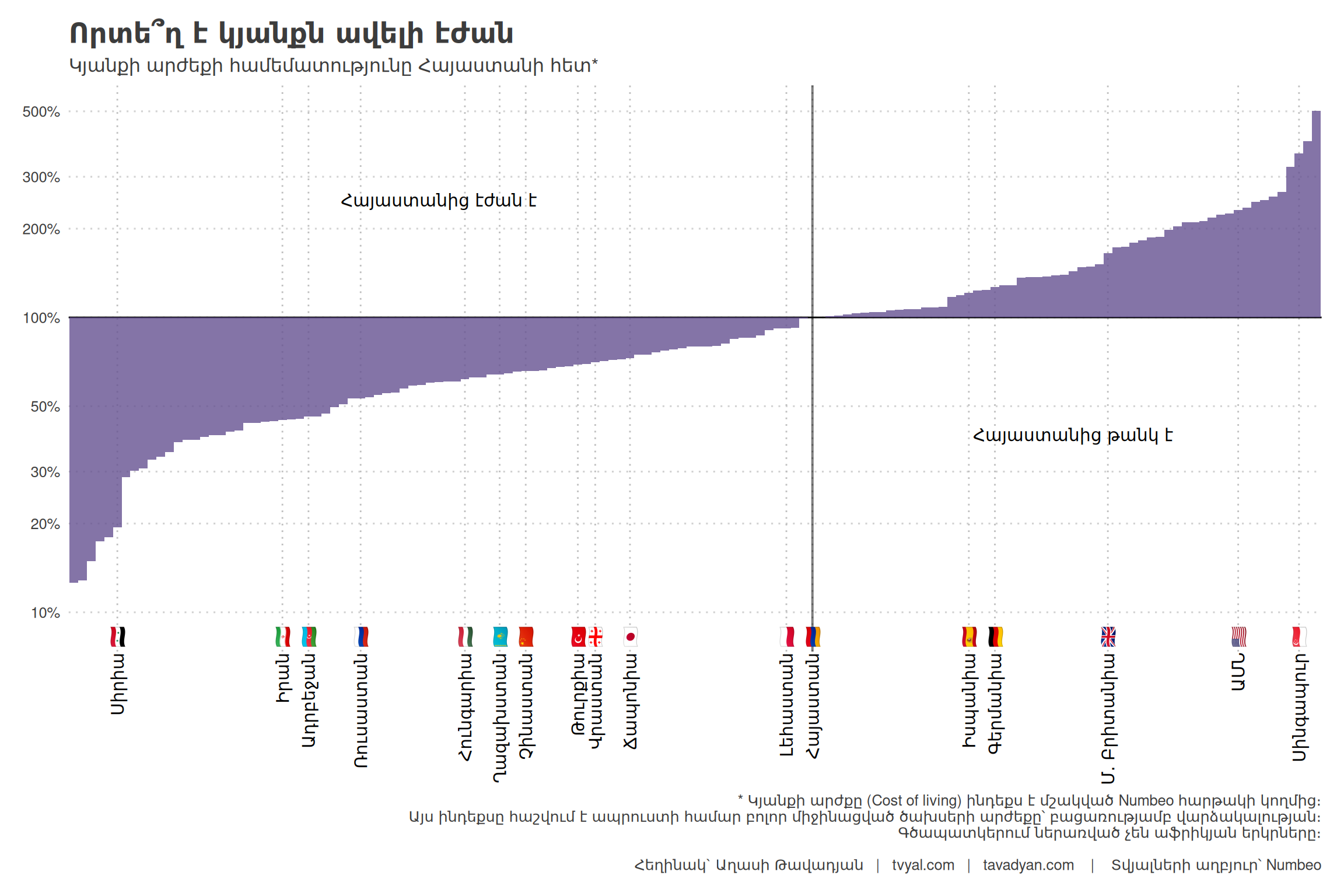
Cost of Living Study. Numbeo’s Cost of Living Index provides a comparative measure of prices for consumer goods, including groceries, restaurants, transportation, and utilities, but excluding rent. In this analysis, we normalized the index relative to Armenia (set at 100%) compared to other states. The results are concerning from the perspective of Armenia’s economic competitiveness. All neighboring countries listed in the first chart have a lower cost of living compared to Armenia. In addition, countries like Hungary, China, Poland, and even Japan show more favorable cost of living indices. Specifically:
- The cost of living in Iran is 60.4% of Armenia’s
- In Russia: 71.6%
- In Kazakhstan: 71.8%
- In Azerbaijan: 74.2%
- In Georgia: 79.8%
Chart 5.
In light of this data, a number of questions arise regarding Armenia’s economic competitiveness. First, how competitive is the Armenian worker truly compared to the workforce of other countries in the region, considering high salaries and the cost of living? Second, how does this situation affect Armenia’s attractiveness as an investment hub? Will foreign investors prefer to invest in Armenia, given the relatively high cost of labor, or will they prefer neighboring countries with lower salaries? This high cost of living in Armenia, coupled with a relatively low salary-to-expense ratio, presents significant challenges for economic growth and the improvement of the quality of life. This situation particularly affects middle and low-income citizens, who are forced to allocate a larger share of their income to meet basic needs.
COLLABORATION
If you want to benefit from your data using AI tools, CONTACT US
We offer
- Extensive databases for finding both international and local leads
- Exclusive reports on the Future of the Armenian Economy
- Work and browser automation to streamline operations and reduce staffing needs
- AI models for forecasting growth and optimizing various aspects of your business
- Advanced dashboarding and BI solutions
- Algorithmic trading
Let’s Put Your Data to Work!
JOIN OUR TEAM
| ## Media Appearances | |
| Watch this interview regarding tax collection and other key economic issues | |
| 📺 Exports of our traditional goods are declining: Aghasi Tavadyan 📺 | |
| [](https://youtu.be/ |