
🆘🇦🇲🧑🏼💻 SOS Armenian IT: Ups and Downs in the Sector
Armenia’s IT sector: from strategic priority to potential decline
In recent years, Armenia’s information technology (IT) sector has been one of the drivers of economic growth. However, recent data shows that this strategic branch is facing serious challenges. This article explores the current state of the IT sector, the problems it faces, and possible solutions.
The Rise and Signs of Decline in the IT Sector
Chart 1.
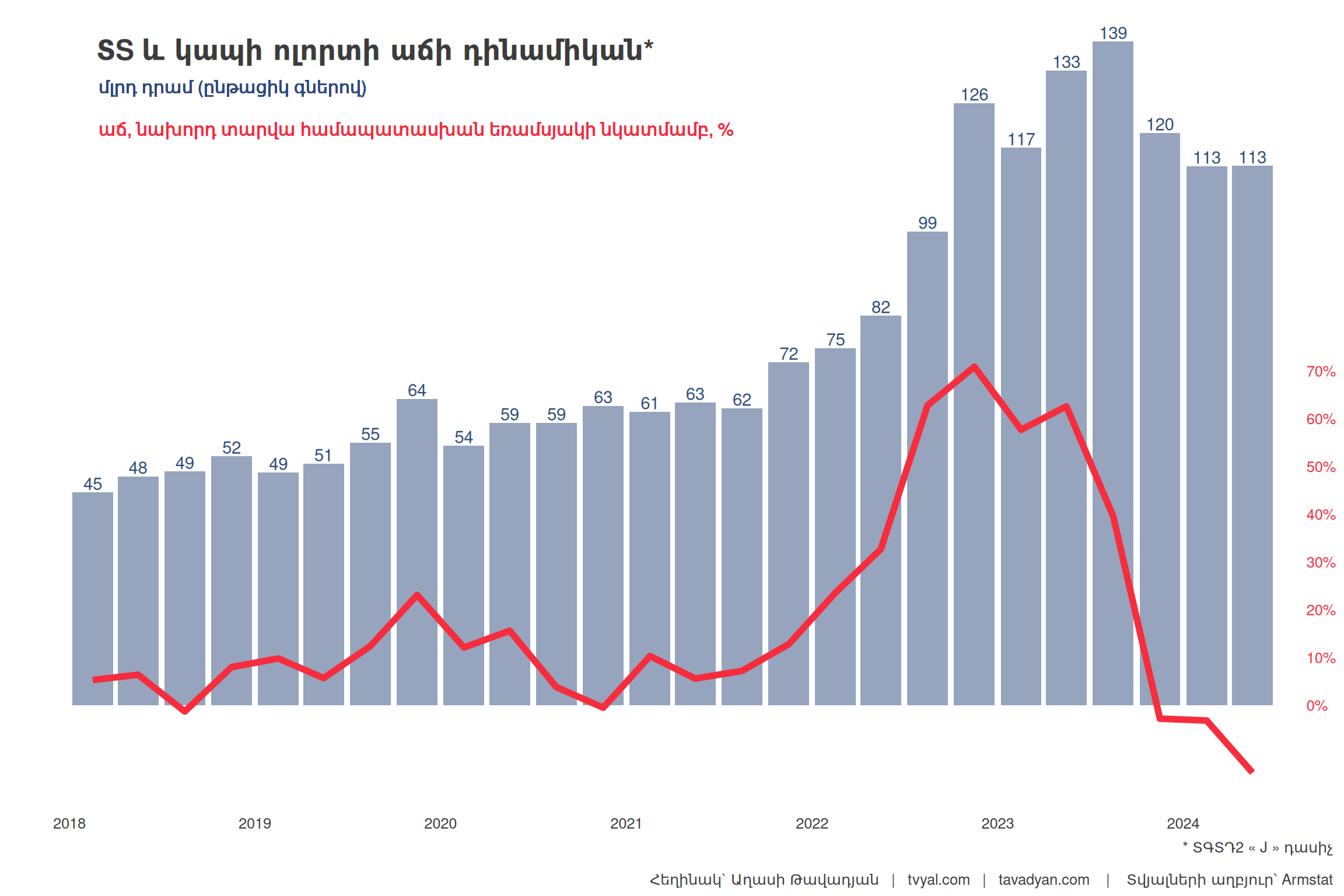
Starting in 2022, Armenia’s IT sector recorded significant growth, primarily driven by the influx of relocated professionals from Russia. During this period, the sector became a significant source of GDP growth, contributing 1-3 percentage points of growth. However, data from the last two quarters shows a concerning picture. This trend is consistent with our previous analysis: 👛💨💰 Empty pockets, high salaries.
As seen from the chart, the sector has recorded negative growth in the last two quarters, which may indicate a crisis in this strategic sector.
Dynamics of IT Companies and Employees
Chart 2.
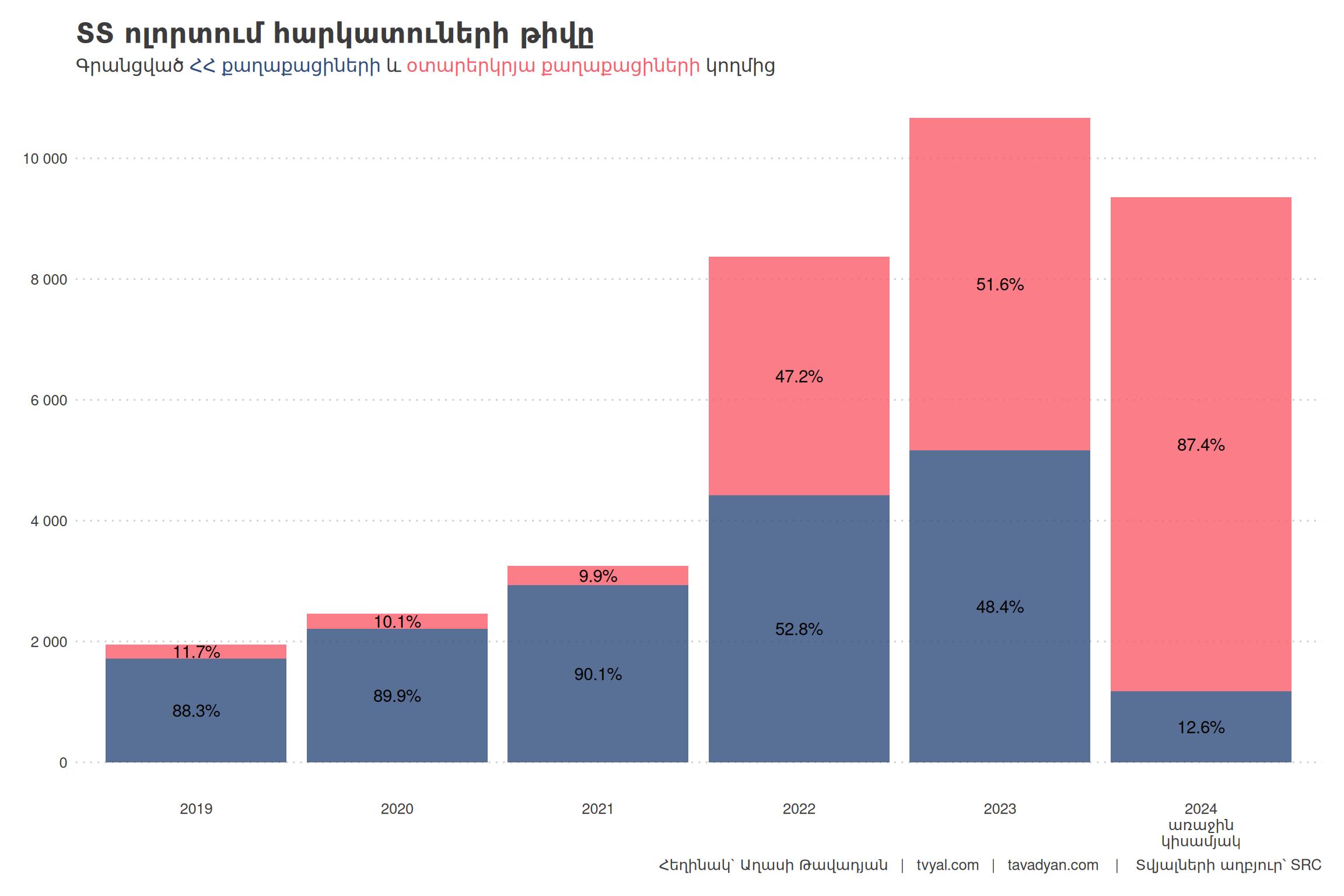
Data from the first half of 2024 reveals several interesting trends:
- IT companies registered by RA citizens: the number dropped sharply from 5,163 to 1,174 (a 4.4-fold decrease).
- IT companies with foreign registration: there was a sharp increase from 5,511 to 8,180.
However, these numbers contradict the dynamics of the number of employees. The number of employees in companies registered in Armenia decreased by only 5.5%. This discrepancy could indicate several scenarios: data inaccuracies, mass closures of small businesses, or changes in registration status.
Chart 3.

Interestingly, according to data provided by the State Revenue Committee (SRC) of the Republic of Armenia, companies registered in Armenia have an average of 24.5 employees, while foreign-registered companies have an average of only 0.74 employees. This significant difference may indicate the presence of numerous “mailbox companies.” In all likelihood, during the first half of 2024, “mailbox companies” registered by RA citizens were closed and subsequently reopened by foreign citizens. Mailbox organizations exist mostly on paper for tax or legal purposes but have almost no real operations.
Salary Dynamics
Chart 4.
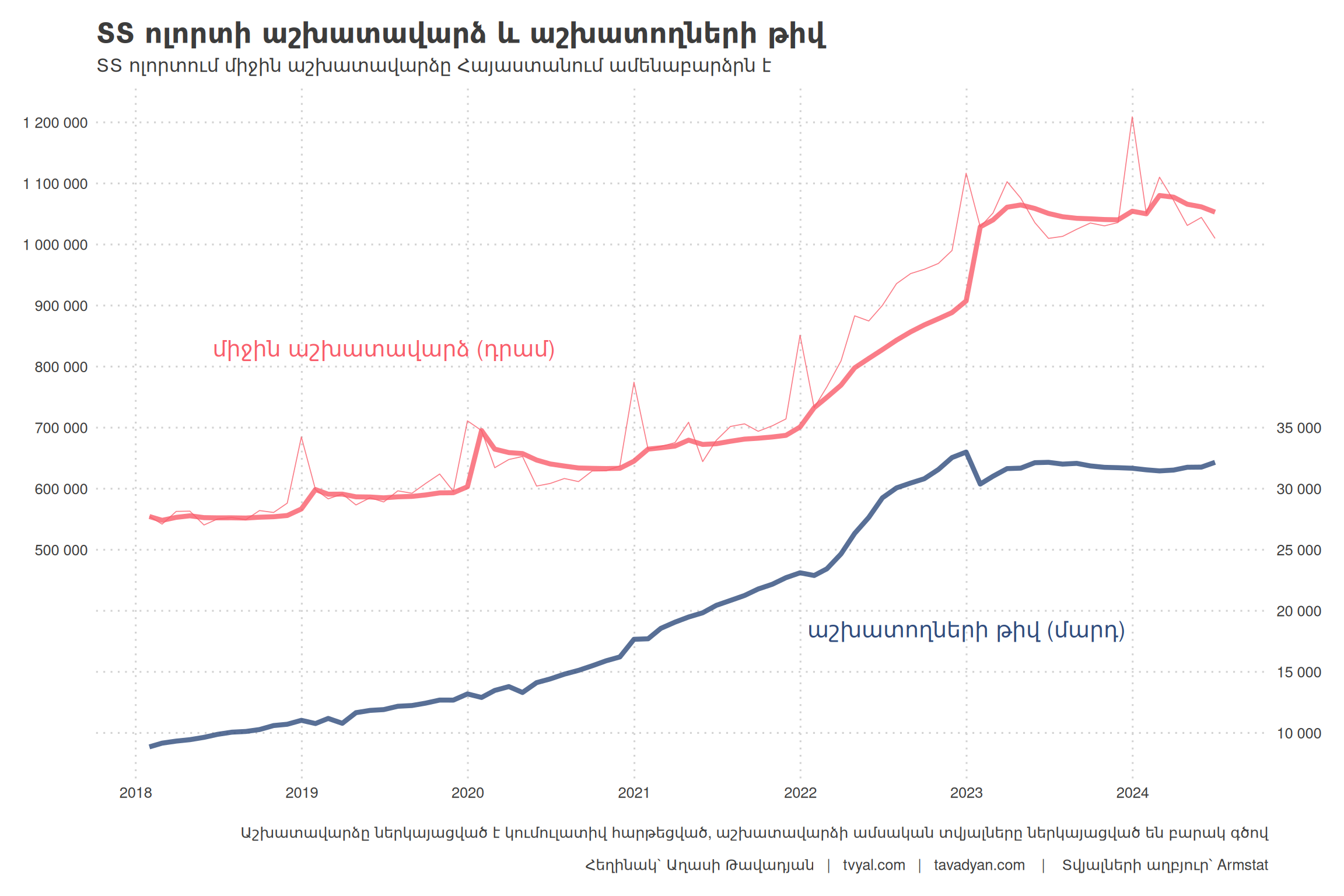
The peak of salary and employee growth occurred at the beginning of 2023. It is worth noting that the sharp growth started at the beginning of 2022, which coincides with the influx of relocated individuals from Russia. However, a slowdown in growth rates has been observed over the past year.
The decision of IT companies to establish themselves in Armenia was driven not by the country’s internal advantages, but by its EAEU membership, which guarantees the free circulation of labor, capital, goods, and services among member states.
Tax Contribution of Major IT Companies
Chart 5.
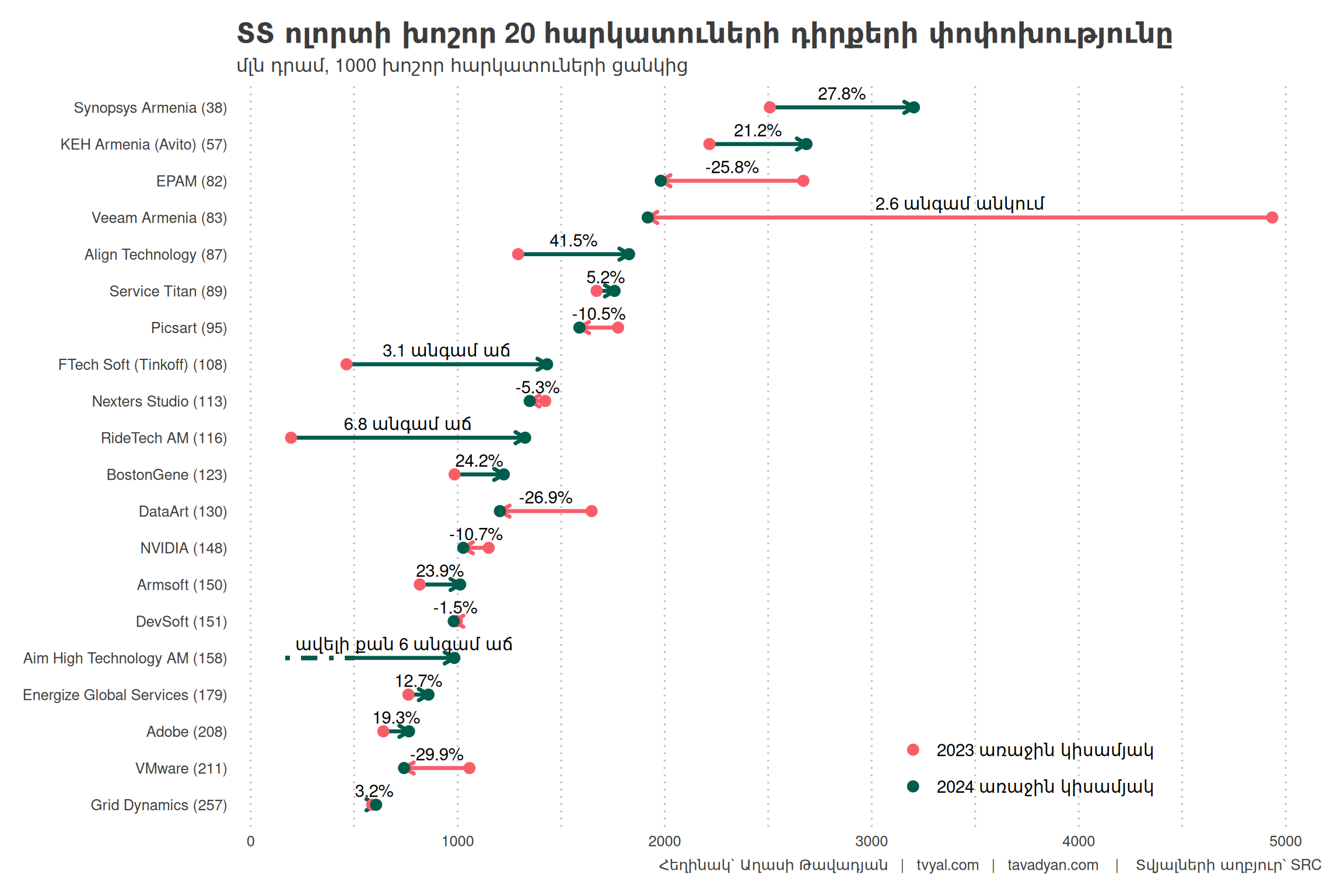
The list of major IT taxpayers reveals a number of interesting trends. During the January-June period of 2024, 79 IT companies were included in the list of the 1000 largest taxpayers, providing 45.9 billion drams of revenue for the state budget, which is 123 million drams less than in the same period of 2023. The contribution of IT companies to total tax revenues decreased from 4.8% to 4.4%.
Synopsys Armenia is the leader, providing 12% of the paid profit tax (1.1 billion drams). However, taxes paid by eight of the 20 largest taxpayers in the IT sector have decreased. A particularly significant drop was recorded in the cases of Veeam Armenia, VMware, DataArt, and EPAM, mainly due to a decrease in income tax.
Reasons for the Decline in the IT Sector
- Appreciation of the AMD: In early 2022, one dollar was worth 480 drams, and now it is 386 drams. The dram is currently the most appreciated currency among convertible currencies. This appreciation negatively affects export-oriented sectors, including the IT sector. In 2022, many local IT companies went bankrupt due to the appreciation of the dram, but this trend was not visible in overall statistics due to the large influx of foreign, especially Russian, programmers. In early 2024, further appreciation of the dram (from 404 to 386 drams per dollar) contributed to new bankruptcies in the IT sector (Read more: 💵🪙🎭 The Drama of Dram. Why does the dram depreciate and appreciate?). Unlike the previous period, there is currently no labor inflow, but rather an outflow of IT professionals.
- Changes in tax policy: 🧮⏳🎲 Tax collection in Armenia has become an end in itself. The turnover tax for small and medium enterprises will rise from 5% to 10% in 2025. At the same time, neighboring Georgia has set a tax of only 1% for IT companies, making that country attractive for Armenian IT companies. It is important to note that tax privileges for Armenia’s IT sector are nearing their end. The reduced 10% income tax rate for certified IT companies will end on December 31, 2024, and profit tax privileges already ended on December 31, 2023. The termination of these privileges could deal a severe blow to the competitiveness and development of Armenia’s IT sector, especially given the more attractive conditions offered by neighboring countries.
- The high cost of living in Yerevan: Due to the appreciation of the AMD, Armenia has become more expensive for foreign professionals. In 2022-2023, the cost of renting an apartment in Yerevan even exceeded prices in Moscow. This reduces the provision of Armenia’s long-term attractiveness. We wrote about Yerevan’s high living costs in the 💲🏙️ Yerevan is more expensive than Moscow analysis.
- Capital outflow: Recently, capital outflow and reduced inflows have been observed in Armenia. IT professionals arrived with capital and are leaving with it. We noticed capital outflow trends earlier this year, as discussed in the article 💸🔚🏦 Capital outflow.
Case Study: Leading IT Companies
Long-Term Consequences and Opportunities
The current situation in the IT sector indicates the need to revise the development strategy. The influx of IT professionals in 2022 was temporary, and long-term policy should not rely on it. The government’s view of tax collection as a primary indicator may jeopardize the long-term tax incentive strategy, which is necessary for sustainable GDP growth.
Recommendations
- Reviewing tax policy: Easing the tax burden can help in a time of economic decline. We discussed tax collection in this material: 🧮⏳🎲 Armenia Taxes Time: A Game with Economic Growth.
- Vanadzor as an IT hub: The city’s strategic location between Yerevan and Tbilisi could be used to attract IT professionals with tax breaks (read also: 💹💳 76 percent of private jobs are in Yerevan).
- Managing the dram exchange rate: A strong currency negatively affects the IT sector and exports, but depreciation could stimulate public debt growth and capital outflow. This circumstance accounts for the perplexity of lowering CB interest rates under conditions of almost zero inflation. This issue deserves separate analysis.
- Affordable housing: Although capital inflow primarily went into housing construction, this issue still requires a solution.
The coming months will be crucial for the future of Armenia’s IT sector. Follow us for analyses on this and other sectors of the economy!