
Electric Armenia: From Grid Vulnerability to Solar Prospects
Analysis and Forecast of Armenia’s Electricity Production
In recent months, frequent electricity supply interruptions have been observed in Yerevan, particularly in the Kentron and Arabkir administrative districts. These outages have disrupted not only normal operations and traffic but also mass events and a government session. All of this even left the impression of “rolling blackouts.” According to the Electric Networks of Armenia (ENA), these interruptions were mainly due to construction and roadworks in Yerevan. Based on data provided by ENA, electric cables were damaged in 31 percent, or 492 out of 1,569 cases, as a result of road construction activities by other organizations. However, according to ENA’s data, the remaining 69 percent of damage was caused by ENA itself.
Chart 1.
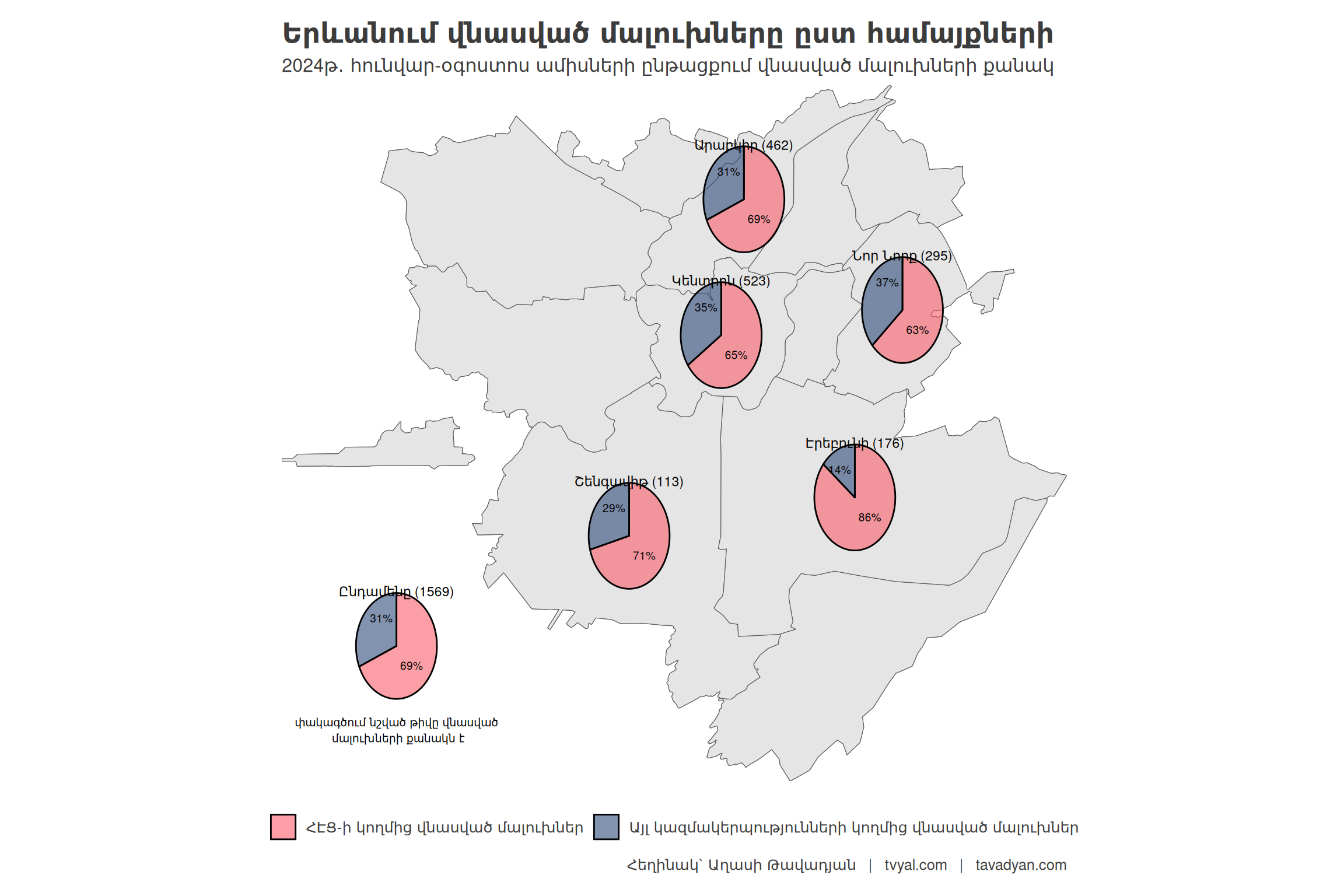
This analysis examines the current state of Armenia’s electric networks and electricity production, while also providing a 2-year forecast. Key findings highlight significant growth in solar energy production, alongside a decline in hydroelectric power generation.
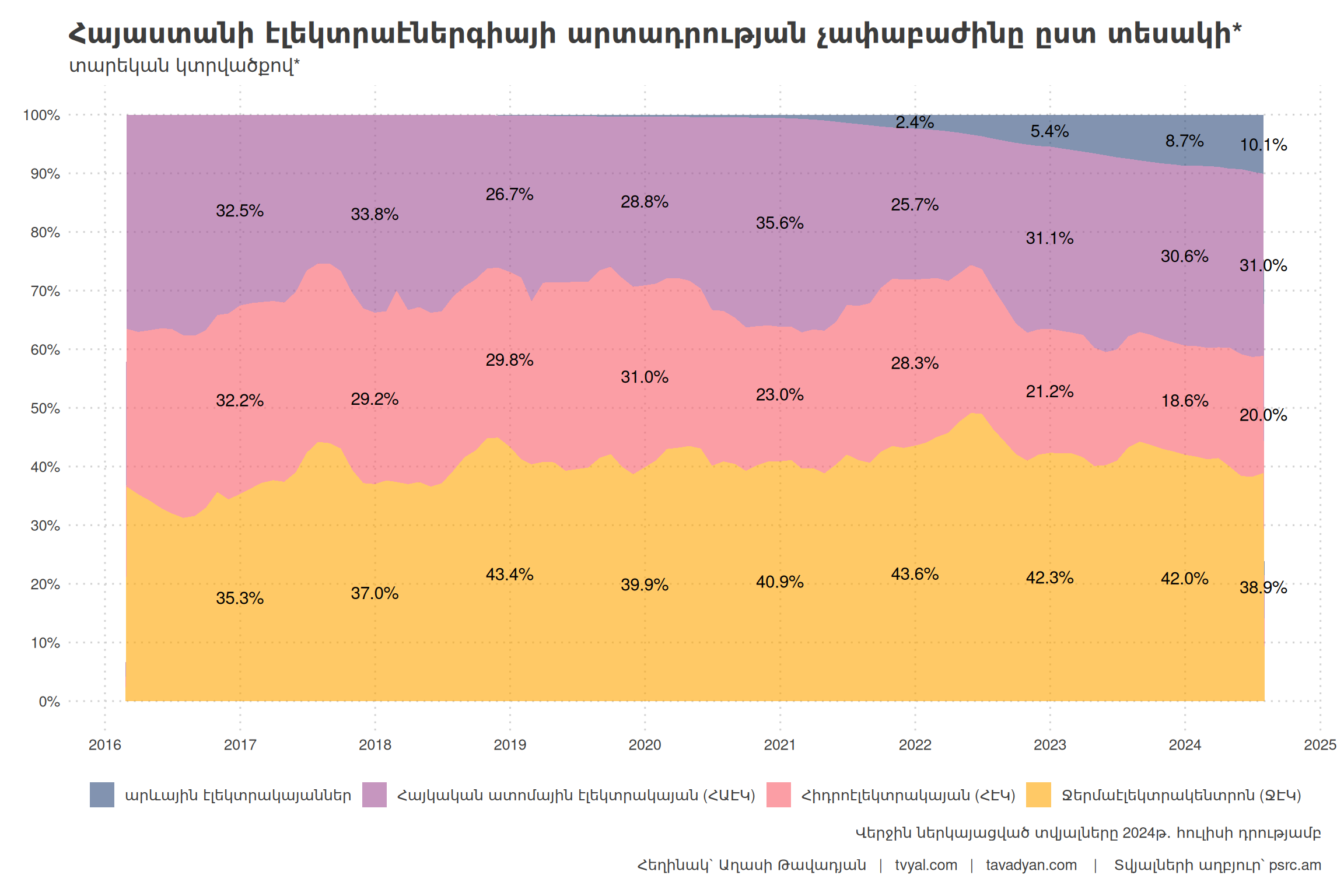
As of July 2024, solar power plants accounted for 10.1 percent of electricity production.
The second chart displays electricity production by main sources. This chart reflects annual electricity generation categorized by power plant types. The percentages of production for each year are provided at the bottom of the chart. Thus, in 2015, Thermal Power Plants (TPPs) provided 35 percent of electricity generation, the Armenian Nuclear Power Plant (ANPP) provided 32 percent, and Hydroelectric Power Plants (HPPs) provided 28 percent. By July 2024, these figures shifted to 39, 31, and 20 percent respectively, while solar power plants now account for 10.1 percent.
Chart 2.
The Importance of Solar Energy
For landlocked Armenia, which heavily relies on imported fossil fuels, solar energy becomes crucial from the perspective of ensuring energy security. First, solar energy provides a decentralized power source, reducing reliance on external suppliers and improving energy security. It should be noted that in 2023, 42 percent, or 3,715.6 million kWh, was produced by TPPs, which utilize gas imported from Russia for electricity generation and represent the most expensive source of electricity in the domestic market. By harnessing solar energy, Armenia can significantly mitigate its vulnerability to geopolitical tensions, price fluctuations, and supply disruptions related to imported gas.
Chart 3.
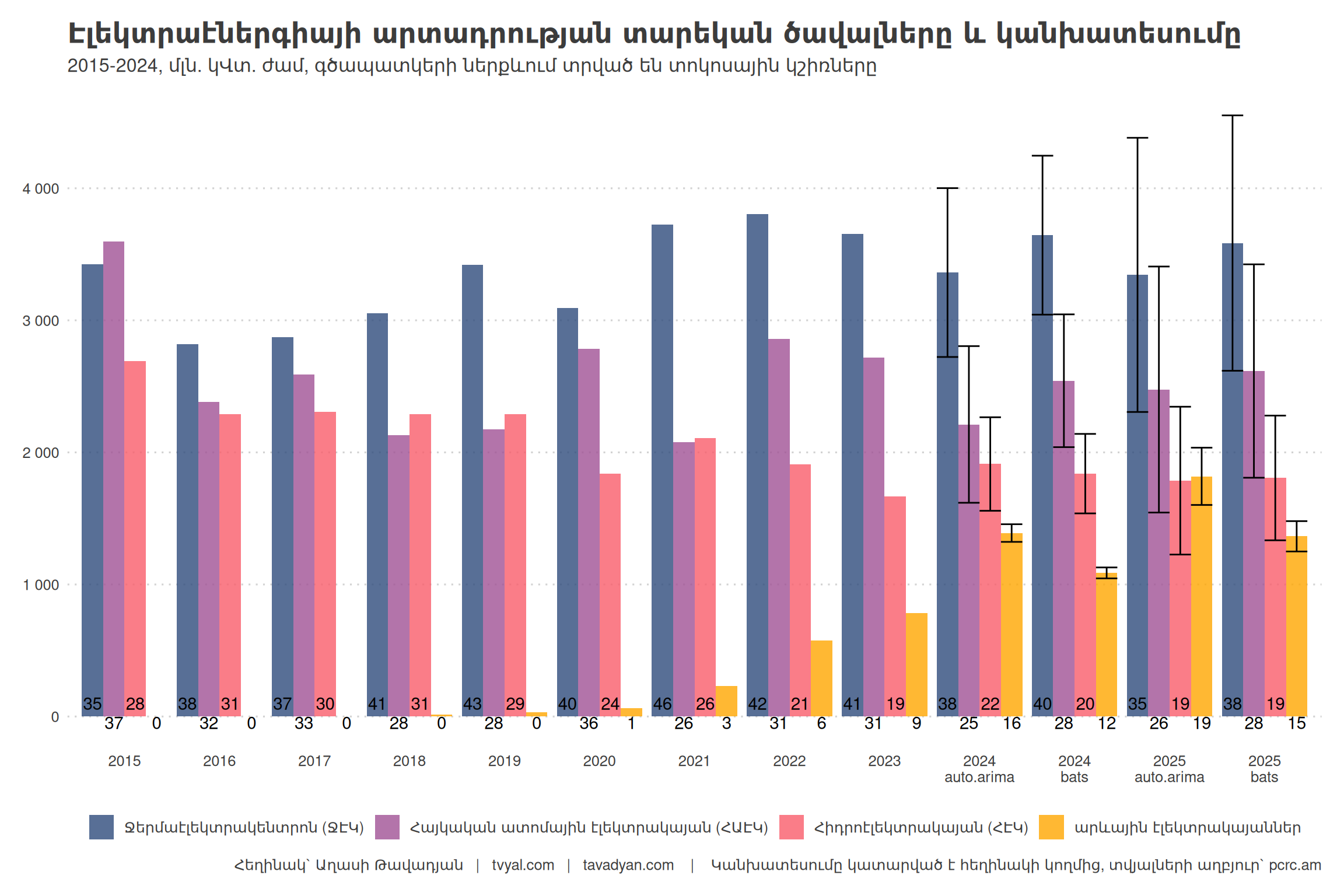
The chart also presents forecasts for 2024 and 2025 using 2 models (AUTO.ARIMA and BATS), complete with uncertainty intervals. According to the 2-model forecast, the capacity of solar power plants continues to grow. By the end of 2024, solar power plants will supply 12-16 percent of the generated electricity. It is possible that by the end of 2025, electricity production from solar power plants will surpass that of hydroelectric power plants. Specifically, according to one of the forecasts, solar electricity will make up 19 percent of total production in 2025.
Challenges Related to Growth
It should be noted that this growth may bring certain challenges. Specifically, solar electricity production has daily and annual seasonality. Peak production occurs at midday, but peak consumption happens in the evening when the sun is already setting. In the event of further growth, the issue of battery storage for excess generated electricity or connection to other international grids must be addressed to ensure that electricity generation and consumption remain balanced.
Chart 4.
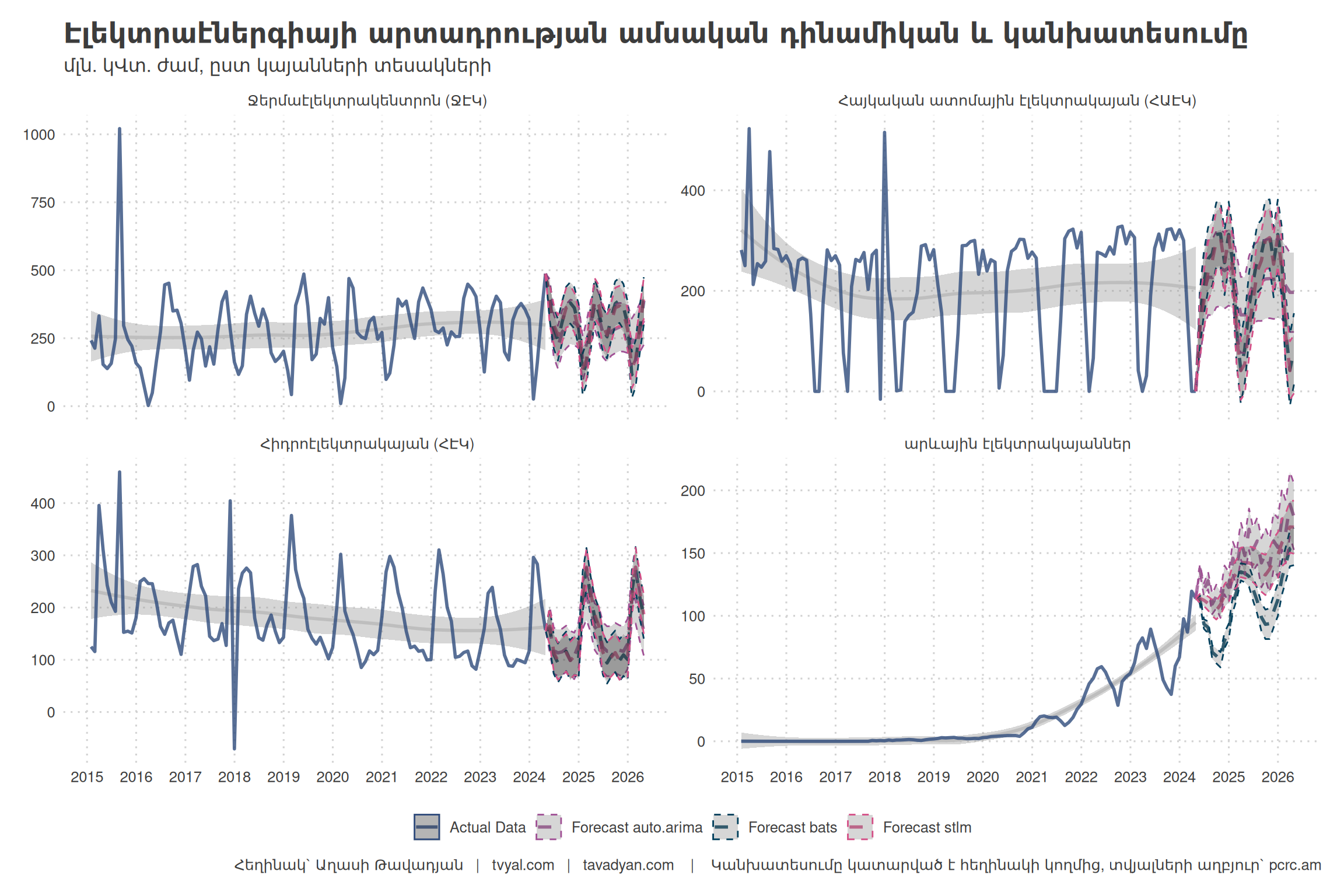
The fourth chart illustrates the monthly volumes of electricity produced in Armenia, broken down by power plant types. The chart also includes a 2-year forecast up to June 2026.
Key trends:
- The Hrazdan TPP, which currently produces the most electricity, shows an unchanged trend. In general, no changes in electricity generation are expected in this sector.
- The chart displays the planned seasonal shutdowns of the Armenian Nuclear Power Plant, which have been planned since 2016 for the purpose of the plant’s modernization and lifespan extension. It should be noted that the ANPP was not operating under planned maintenance during June-July 2024.
- Production from hydroelectric power plants is on a downward trend. If, in 2017, an average of about 200 million kWh of electricity was produced monthly, by 2023 this figure fell to about 150 million kWh per month. This raises some concerns regarding securing the growth of renewable electricity. Here, the trend relies on the seasonality of water intake, which is also reflected in the forecasts.
- In recent years, Armenia has been on an exponential growth curve in solar electricity. This growth will continue. Solar power plants are becoming the primary source of electricity production.
You might also be interested in the following analyses:
Chart 5.
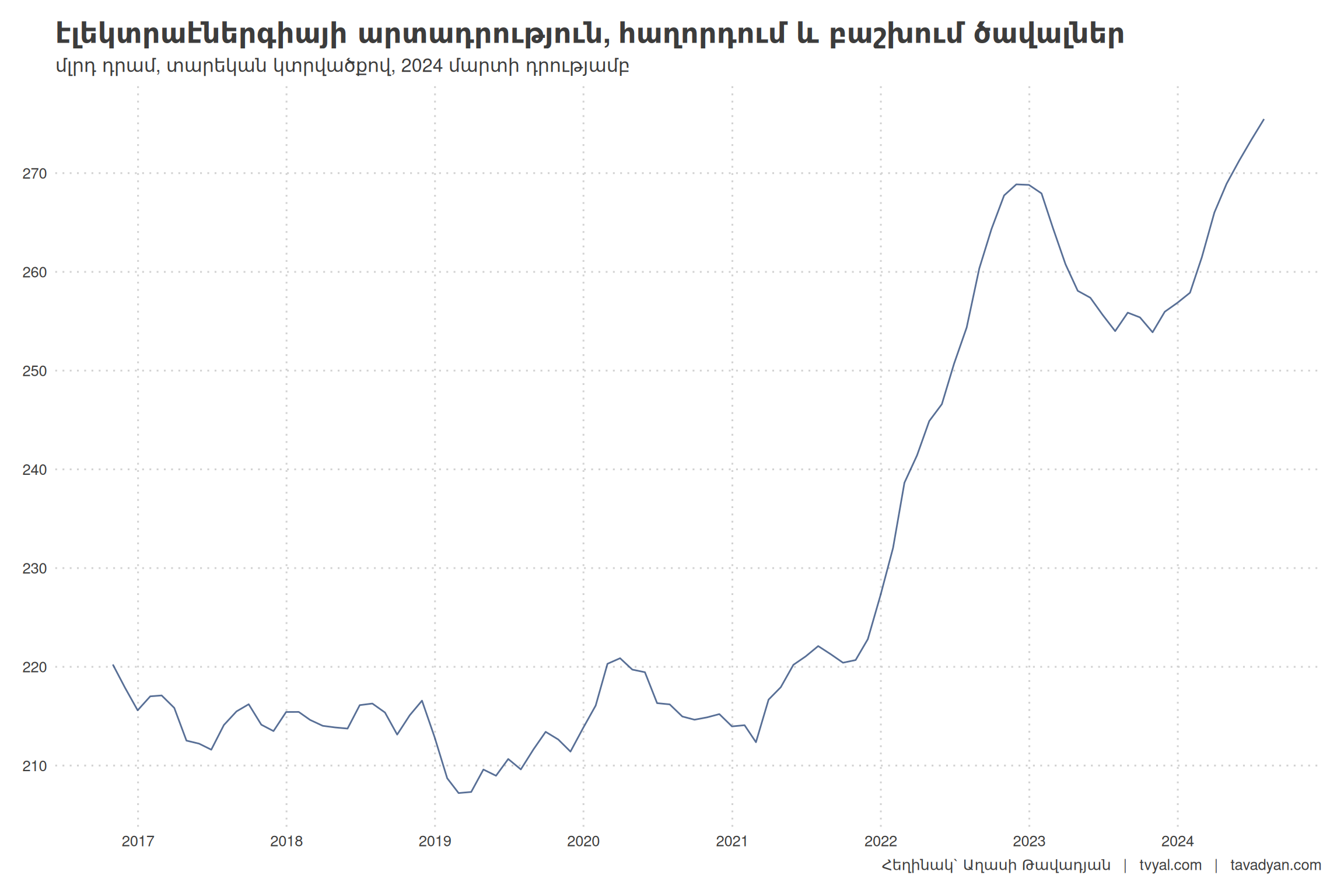
The final chart reflects the volume of electricity production within total industrial output at current prices. The chart is presented on an annual basis. Here, as in our other analyses, the rapid growth in electricity production in 2022 is visible. The total volume of electricity production in AMD grew by 18.3% in 2022 (from 227.2 billion drams to 268.8 billion drams). This reflected the economic growth aligned with the significant capital inflow from Russia and substantial growth in construction. By 2023, a 4.4% decline was recorded, falling to 256.9 billion drams, which also indicates that the significant growth in 2022 was of a temporary nature. Starting in 2024, there is once again an increase in electricity production.
Conclusion
There is a global trend of transitioning to electric vehicles and renewable heating methods. A significant portion of home heating and vehicle charging is likely to be powered by electricity in the future. This will increase the demand for electricity, and consequently, household consumption growth will drive up electricity generation. However, this could stress Armenia’s energy system. If the majority of households switch to electric vehicles and electric heating, this could double the demand for electricity—a level of infrastructural capacity Armenia does not currently possess. The potential doubling of demand and supply could strain electrical infrastructures, requiring urgent upgrades. To avoid these risks, it is necessary to increase production capacities and the quantity of electrification infrastructure. Thus, a specific plan must be put in place to ensure that within a few years, Armenia’s electrical infrastructure is ready to provide 18,000 million kWh of power annually.
* From 2023 onward, there is a computational change in solar electricity production. The volumes of solar electricity generation now include the quantities of electricity produced by autonomous generators through electricity exchange mechanisms. To account for this, the solar electricity production figures prior to 2023 have been adjusted.