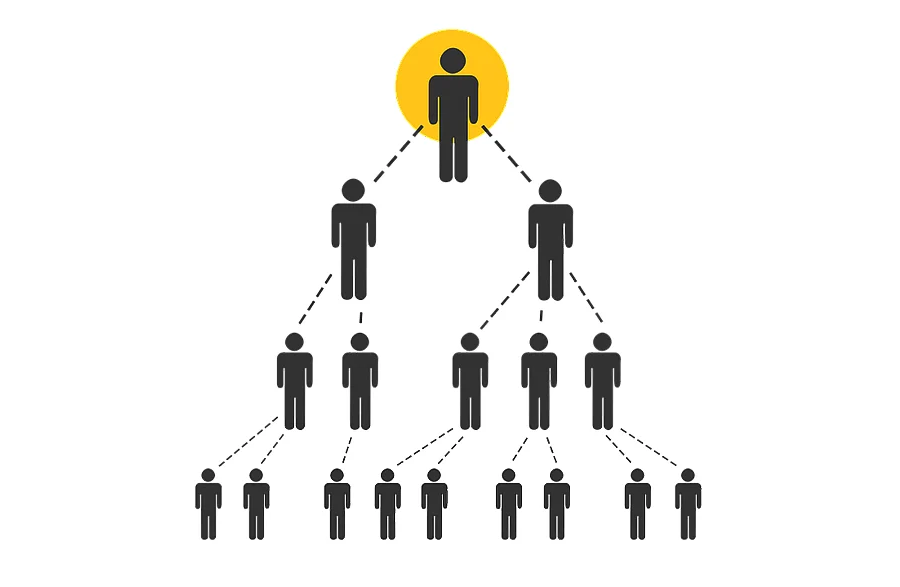
Demographic Crisis: 2 Million Armenians in Armenia by 2100
Armenia faces serious demographic challenges that will play a crucial role for the country’s future. According to projections, by 2100 Armenia’s population could decline to just 2 million people. This decline threatens the economic and social foundations of the country. Let’s study the data and understand what is driving this trend and what consequences it could have for Armenia. In the long term, the country’s potential for economic growth is driven by two fundamental factors: the size of the future population and the improvement of energy infrastructures. We already addressed Armenia’s energy challenges and opportunities in our recent analysis 🔌⚡🇦🇲 Electric Armenia: From Grid Vulnerability to Solar Prospects. Today we will discuss the demographic challenges that could fundamentally reshape Armenia’s future.
Chart 1
The first chart shows Armenia’s historical population trends and future projections. While population growth is observed in Azerbaijan, Armenia’s figures show a downward trend. This decline is not just numbers; it reflects a fundamental shift in Armenian society that will affect everything from economic growth to national security. The projected trend is based on data recorded up to 2019. The projection does not take into account the 2020 44-day Artsakh war, the loss of Artsakh in 2023, and the consequent emigration of Artsakh Armenians, as well as the relocation of about 100-140 thousand relocants from the Russian Federation to Armenia due to the Russian-Ukrainian conflict, and the immigration of a relatively large number of Indian citizens to Armenia over the last two years. Note that the immigration of 100-140 thousand citizens of the Russian Federation makes up 3-4 percent of Armenia’s population. A significant portion of the relocants from the Russian Federation are Armenians. According to the former Minister of Economy, about one third of the relocants had already left Armenia 6 months ago. These significant changes are not yet factored into this forecast. All of this may mitigate the demographic problem to some extent.
The Fertility Rate: The Core of the Problem
At the core of the population decline is the fertility rate: the average number of children born to one woman. To maintain a stable population level, this number must be approximately 2.1 children per woman (the so-called replacement level). Why exactly 2.1, and not just 2? The additional 0.1 takes into account a number of real-life factors: some children do not reach adulthood, some do not have children of their own, and others emigrate. This small but essential difference is crucial to maintaining population stability. However, the current fertility rate in Armenia is only 1.6, which is significantly below the level needed to maintain the population. Chart 2
This chart shows how fertility rates in Armenia and neighboring countries have changed over time. The trend is obvious: Armenia, like most of its neighbors, has recorded a steady decline in the birth rate. However, there are important regional differences:
- Azerbaijan maintained a higher fertility level in the 1990s and 2000s
- Georgia shows similar trends to Armenia, but with a certain time difference
- Georgia has currently restored the 2.1 fertility level
- The decline in Turkey’s fertility rate has been more gradual
- Among the mentioned countries, Russia currently has the lowest fertility rate
It is worth noting that after the collapse of the USSR, in contrast to Armenia and Georgia, the opposite trend was recorded in Azerbaijan; the population grew by 7.3 percent. This is explained by the fact that the standard of living in Azerbaijan was lower than in neighboring Transcaucasian countries, so no major fluctuation in the standard of living was recorded against the backdrop of the war and economic changes. We emphasize that in 1990, Azerbaijan’s population was 7.2 million, and in 2020, it was already 10.2 million.
Calculation of Demographic Decline
Chart 3
The third chart reveals the mathematical reality of population decline across generations. With Armenia’s current fertility rate of 1.6:
- First generation (25-30 years): 23.8% decline
- Second generation (50-60 years): 41.9% decline
- Third generation (75-90 years): Even deeper decline
To visualize: if we start with 1,000 people, given the current fertility:
- 2050: will decrease to 762 people
- 2080: further decrease to 581 people
- 2100: continuous decline
This compounding effect explains why even small changes in the fertility rate have such a dramatic long-term impact on population size. It is also important to note that the calculation shows that a stable birth rate of an average of 2.6 children per woman could double the society within 100 years.
You can read the study of Armenian families by age and sex composition and income level here: 👨👩👧👦✨ Strong Family: Rich Family. Also, check out our previous weekly analyses 👛💨💰 Empty Pockets, High Salaries 🆘🇦🇲🧑🏼💻 SOS RA IT: From Strategic Priority to Potential Decline The complete list of analyses is here
The Issue of Sex-Selective Abortions in Armenia
It should be noted that in 2000, there were 117 newborn boys for every 100 newborn girls in Armenia, which is a large deviation and creates a gender imbalance. That year, this negative ratio was the highest in Armenia compared to other countries in the world. This circumstance is mainly explained by sex-selective abortions, when parents or a parent decide to terminate the development of a female fetus.
The chart presents the 4 countries with the largest deviations in the sex ratio of newborn children (China, Azerbaijan, Armenia, Vietnam), as well as the levels of Georgia and the world.
Chart 4
Note that at the natural birth level, there are 105 to 106 boys for every 100 newborn girls. In other words, even without selective intervention, there is already some inequality at birth. The reason for this is that compared to girls, boys are more likely to be born with inclusive or other diseases, and are more likely to die during maturation. Normal gender equality comes after puberty, when the number of boys and girls equalizes.
Note that until 1990, Armenia was at the normal level of 106 boys per 100 girls. After the first Artsakh war, this normal ratio was sharply disrupted in both Armenia and Azerbaijan, in favor of the birth of boys, which can be explained by the fact that a significant number of men died during the war, as a result of which women outnumbered men by about 10 percent.
In 2021, there were already 109.5 boys for every 100 newborn girls, meaning the situation is improving. It is expected that in 2028 Armenia will return to the normal level of 106 boys per 100 newborn girls.
From National Security to Culture
The population decline affects Armenia’s ability to maintain strong defense forces. In a region where security challenges are constantly present, this demographic change could have serious consequences for national security.
Our cultural heritage also faces challenges. With the declining number of young people, it becomes more difficult to preserve the vitality of traditional customs, language, and art. It is highly likely that in order to maintain current demand and economic growth, the workforce and population will be replaced by immigrants from Asia and Africa, where the fertility rate is above 4.
What Can Be Done?
Some countries have found ways to overcome these challenges. Financial incentives for families with children, kindergarten support, and housing assistance for young families can help raise the birth rate.
Migration policy can also play its part. Programs for attracting qualified specialists, strengthening ties with the diaspora, and supporting integration can help mitigate population decline.
Economic reforms are equally important. By increasing productivity and promoting innovation, Armenia can partially compensate for the shrinking workforce. Regional development initiatives can help achieve a more even distribution of the population across the country.
An Appeal to Women and Families
While it is important to respect personal choice, the data clearly shows that Armenia’s future depends on reversing the current demographic trend. Having a child is not just a personal choice; it is an investment in our nation’s future.
Supporting women in balancing career and family life is crucial. This means better maternity benefits, flexible working conditions, and affordable kindergartens. Countries that have successfully overcome demographic challenges have found that supporting women’s freedom of choice, both in their careers and in family life, leads to better outcomes.
The decision to have a child is deeply personal, but understanding its broader impact on the future of society can help in making these choices. When women feel supported in both professional and maternal roles, they are more likely to choose to have more children while maintaining their careers.
Looking to the Future
The challenge facing Armenia is not just about numbers; it is about the kind of society we want to build for future generations. By understanding these challenges and acting now, we can work towards solutions that will ensure a vibrant and sustainable future for Armenia.
No future generation, no future society
Global Population Projection Dashboard
I would be grateful if you could write me suggestions to improve this dashboard, as we strive to improve its functionality and ease of use.